Salmonid Series

Pacific Salmonids: Spawning Habitat Restoration
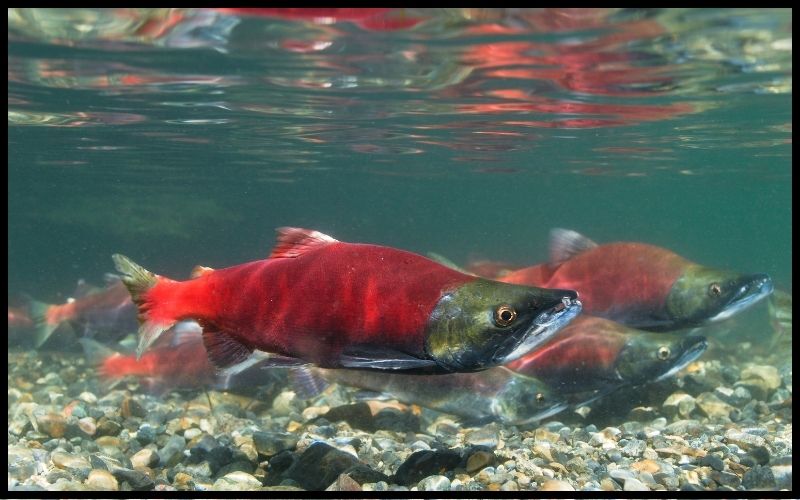
Bright red salmon in a river

How can we restore form and function to rivers, streams, and wetlands that support Pacific Salmon?  This course provides the intellectual tools to tackle assessment monitoring and restoration design of Pacific salmonid habitat.  

Some of the basic topics and questions covered include:

  • History of salmonid habitat restoration – How long have salmon issues been issues?  How have we responded?  What’s been working and what hasn’t?
  • Ecohydraulics – How does stream flow affect salmonid ecology and habitat forming processes?  What basic ecohydraulic processes do we need to account for?  What tools should we use? How can we use ecohydraulics to understand why a site is functional versus non-functional? 
  • Ecohydraulic design – the basic act of designing channel and floodplain features to meet specific target depths and velocities.  How do we take basic habitat information and design functional ecosystems?
  • Sediment transport – sediment is a vital aspect of rivers and streams and a key variable known to affect spawning.  How does sediment move in rivers?  How can we measure and model it?   What tools are available?
  • Forcing Elements – what role does wood and coarse sediment play in salmon rivers and streams?  How can we integrate Forcing elements into our design and management plans?
  • Monitoring – How do we measure project success?
  • Modern river restoration techniques – What tools do we have to restore salmonid habitat form and function?
  • Fish passage – How do we assess and correct fish passage limiting factors?


What attendees are saying about the course:

"I learned a ton ... [The instructors] are very knowledgeable and helpful when answering questions."  Meredith G., May 2019

"I really enjoyed the field component of the class. It incorporated the concepts we learned to a real-life situation." Shena H., November 2015

"Both Joe and Rocko were very engaging and knowledgeable. I really appreciated how enthusiastic and easy-to-listen-to they were." Mandy C., November 2015

"I liked the variety of material covered; how we had both the biology as well as the geomorphology." Paige A., Feb 2013


Intended audience

This course is designed for practitioners and agency personnel involved with field data collection, detailed design and/or review of river restoration projects. It provides general training in design, implementation and monitoring of in-stream habitat improvement projects in regulated streams and rivers, with an emphasis on the issues surrounding Pacific salmonid spawning.


Prerequisites

Suggested - "The Ecology of Pacific Salmonids"

CEUs
2.00
Course Topics

The course will explain and demonstrate common techniques for:

  1. Assessing habitat and collecting and analyzing field data
  2. Integrating physical, biological and aesthetic objectives into habitat improvement design
  3. Characterizing and estimating sediment transport and sediment budgets for enhancement sites
  4. Designing effective monitoring programs
  5. Choosing appropriate fish habitat improvement designs
  6. Channel and instream structure design
  7. Sediment transport
  8. Understanding enhancement limitations
  9. Selecting equipment and material
  10. Fish passage assessment and design techniques
  11. Data and project presentation
Course Materials
Attendees will receive a course manual containing workshop proceedings and reference material.
Course series

Pacific Salmonids: Ecology

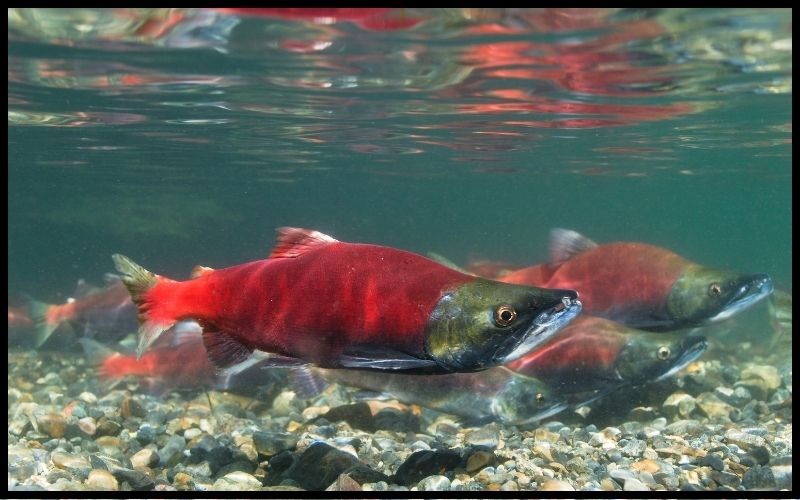
White Red Salmon swimming upstream

Salmonids, including Pacific salmon and trout, are an important component of ecologic and economic health in western North America. Salmon and trout of the Pacific Coast have continued to evolve in the face of natural disturbances such as floods, fires, volcanoes, wind-throw and disease. In fact, these influences have helped these species maintain their resiliency. Even when natural disturbances have been severe their effects have remained localized, thereby allowing ecosystems to more easily recover. However, the magnitude of human-caused disturbances may be so great that irreversible changes will occur by increasing the impact that natural disturbances have on aquatic communities, resulting in both acute and chronic consequences for salmonids. Moreover, the changes that human activities create may be so widespread that the recovery of individual ecosystems and their components, including salmonid stocks, could be drastically altered.

While each salmonid is unique, the genetic diversity within species across drainages may be as significant as those found across different species. Despite this variety, salmonid stream management, recovery and protection initiatives rely on certain fundamental biological requirements.

This course will provide general information regarding:

  • Origins and evolution of Pacific North American Salmon;
  • Life stages of salmon and trout in both coastal and inland streams;
  • The habitat requirements applicable to each life stage;
  • Substrate quality and hydraulic flow affecting spawning behavior and redd success;
  • How habitat features, in-stream complexity, bank structure and large woody debris influence success of salmonids at different life-stages;
  • How water chemistry, water temperature and food availability affect trout and salmon behavior; and
  • How migration patterns can be impeded or enhanced by changes in flow, water quality, barriers or obstacles

"Joe [Merz] is very enthusiastic and knowledgeable.The course met and exceeded my expectations. It covered all of the basic aspects of salmonid ecology and many of the questions I've had." Leif H., May 2019

"I thoroughly enjoyed this class and feel like I have a better understanding of Salmonid ecology/biology. Thank you!" Allison F., October, 2015

"Joe [Merz]'s knowledge is immense! He is a HUGE asset to NWETC!" Sean E., October 2015

"Great delivery and presentation of a highly complex and often politically heated scientific topic. Interacted with participants, and incorporated questions throughout presentation." Jess H., May 2015

"Fantastic content. I'm a geologist and I thought the content and pacewas perfect. I have a much better understanding of why I regulate certain parameters." Anonymous, May 2015


Please wait to receive a course confirmation email, roughly one month prior to the class, before making any travel arrangements.
 

Intended audience

This course is specifically designed for practitioners and agency personnel, including biologists, ecologists, hydrologists, planners and regulators involved in stream issues addressing salmonids, water supply and quality issues.

CEUs
1.30
Course Topics
Day 1 tentative schedule:

9:00 AM - Introduction and Overview
Why are salmonids important?
What Is the Difference Between a Salmon and a Trout?
Salmonid species
Origins of the Pacific North American Salmon

10:45 AM Break

11:00 AM - Salmonid physiology
Anatomy
Processes
Life stages

12:00 PM Lunch

1:00 PM - Adults
Spawning Populations
Timing of Spawning Runs
Timing of Spawning
Redd Characteristics
Fecundity
Spawning
Egg Deposition

3:00 PM - Freshwater Residence and Downstream Migration
Incubation and Survival
Eggs and Alevins
Emergence and Fry
Juveniles
Parr
Smolts
Emigration

3:30 PM - Estuaries

4:30-5:00 PM Adjourn


 Day 2 tentative schedule:

9:00 AM Prey and Predators
Salmonids as predators- Trout and salmon food habits in fresh water
Salmonids as Prey

10:15 PM Break

10:30 PM Physical parameters
Physiology
Temperature Requirements
Dissolved Oxygen Requirements
Stress, what is it and how is it measured?
Habitat Impacts, mitigation and restoration

12:00 PM Lunch

1:00 PM The 4 H’s – hydro, habitat, hatcheries, and harvest

2:00 PM Ocean Ecology
Climate, Topography and the Marine Environment

3:30 PM Hatchery Effects
Hatchery issues associated with Pacific salmonids

4:30 PM Class Ends


Course Materials

Attendees will receive a course manual containing workshop proceedings and reference material.

Course series