Contaminant Vapor Migration and Intrusion

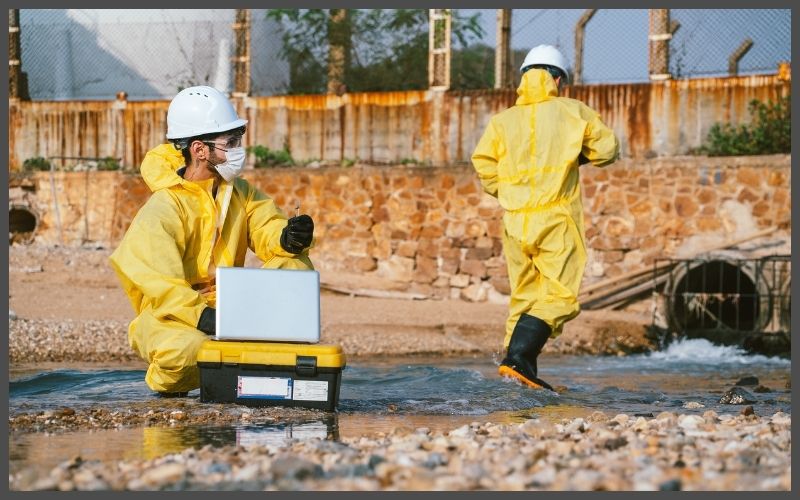
Two men in a construction yard gathering tests, wearing yellow suits

This course provides an overview of the vapor intrusion exposure pathway including its scientific foundation, regulatory framework, and the technical aspects of investigating and remediating contaminated vapor sites. The class will cover topics such as: screening sites for potential vapor intrusion concerns, conducting field investigations, sampling techniques, data analyses, exposure point calculations, the Johnson and Ettinger predictive model, vapor intrusion risk assessment, vapor intrusion mitigation, and remediation. Participants will work through practical problems and typical site scenarios based on case studies of established vapor intrusion sites. This course provides a comprehensive introduction for those new to the field, and will also provide insights, data analysis techniques, and the latest research for more advanced participants.

"This course was very organized and interesting...gave real life case studies that helped me understand the topics that were taught throughout the course." K. Erney, February 2013

"Thorough.  The instructor included references to local (state) guidance and its divergence from other VI guidance." C. Grover, February 2013

"I really liked how the instructor used state specific guidance and compared it to other states' + EPA guidance...the case studies were great - really illustrated the content of the course." R. Ridenour, February 2013

"The instructor is knowledgeable and very willing to engage students." D. Hammer, February 2013

"His extensive real world experience gave confidence in his knowledge." R. Timmins, August 2013

"Very good course overall very helpful as an introduction to VI.  Instructor very knowledgable and explained content in a very clear way." L. Galu, August 2013

Intended audience

Environmental professionals seeking an improved understanding of vapor migration and intrusion with an emphasis on vapor assessment and modeling. The material is intended for practitioners working on remediation of hazardous substance release sites and brownfields redevelopment.

Prerequisites

Basic math skills and a general understanding of contaminated sites.

CEUs
1.30
Course Topics

Overview and Definitions

  • Defining “volatile chemicals”
  • Migration pathways

Vapor Migration Issues

  • Human health risks
  • Universal nature of pathway
  • Mitigation/Remediation
  • Future property development/brownfields redevelopment 

Vapor Chemistry

  • 3 and 4 phase chemical partitioning
  • Partitioning as predicted by: Henry’s law, vapor pressure, and Raoult’s law

Vapor Physics

  • Diffusion
  • Fick’s law
  • Advection

Hydrogeology

  • Soils
  • Vapor permeability
  • Heterogeneities
  • Porosity (total, air-filled/water-filled)
  • Perched water
  • Preferential vapor migration

Biodegradation

  • Chlorinated VOCs
  • Petroleum hydrocarbons 

Building Design Issues

  • Foundation types
  • Space partitioning
  • HVAC systems

Regulatory Framework:

  • ITRC guidance
  • DTSC guidance & CHHSLs
  • RWQCB ESLs

Vapor Intrusion Investigations

  • Sampling techniques for groundwater, soil, subslab, and indoor air
  • Depth discrete
  • Temporary vs. permanent monitoring points
  • Analytical methods
  • Spatial temporal variability
  • Limitations
  • Correlation to indoor levels

Data Analysis and Interpretation

  • 90/95% UCLs
  • Using means
  • Partitioned buildings
  • Separation of ventilation systems 

Johnson and Ettinger Model

  • Types
  • Data needs
  • Parameter sensitivities
  • Accuracy
  • Value
  • Problems and limitations
  • Guidance

Case Studies

Vapor Mitigation Systems and Engineered Controls

  • Modified HVAC systems
  • Air treatment
  • Sub-slab depressurization (types, performance/reliability)
  • Vapor barriers (types, specifications)
  • Combination systems

Vapor Remediation

  • Source-zone treatment
  • SVE systems
  • Dual-phase
  • Demonstrating compliance
  • Off-gas treatment

Institutional Controls

  • Government controls
  • Propietary controls
  • Enforcement tools with IC components
  • Informational devices
  • Monitoring of ICs 

New Developments in Vapor Intrusion

  • Future of Johnson and Ettinger model
  • EPA databases
  • Correlation levels
  • Empirical vs. theoretical results
  • HVOCs vs. petroleum
  • EPA guidance and use of generic attenuation factors
  • Other vapor guidance


Course Materials
*Registered attendees will receive a PDF copy of course materials prior to the class. A hard copy may be requested for United States addresses.
What to bring

A computer with an internet connection. You may want your text available or pencil and paper to take notes.

Upcoming Course Sessions Format Session Schedule Location
VAQM-401 November 16-17, 2026 Online: Live Webinar November 16, 2026 8:30 am - 4:30 pm
November 17, 2026 8:30 am - 4:30 pm

Cancellations

  • With 31 or more days notice, we will offer a 100% refund or credit towards a future course. The credit is good for one year and may be applied to any course.
  • With 30–8 days notice, we will offer a course credit towards a future course. The credit is good for one year and may be applied to any course.
  • With fewer than 8 days notice, there is no course credit available.

Please note that attendee replacement is welcome at any time.